_logo.svg "IPASS(R)_logo")

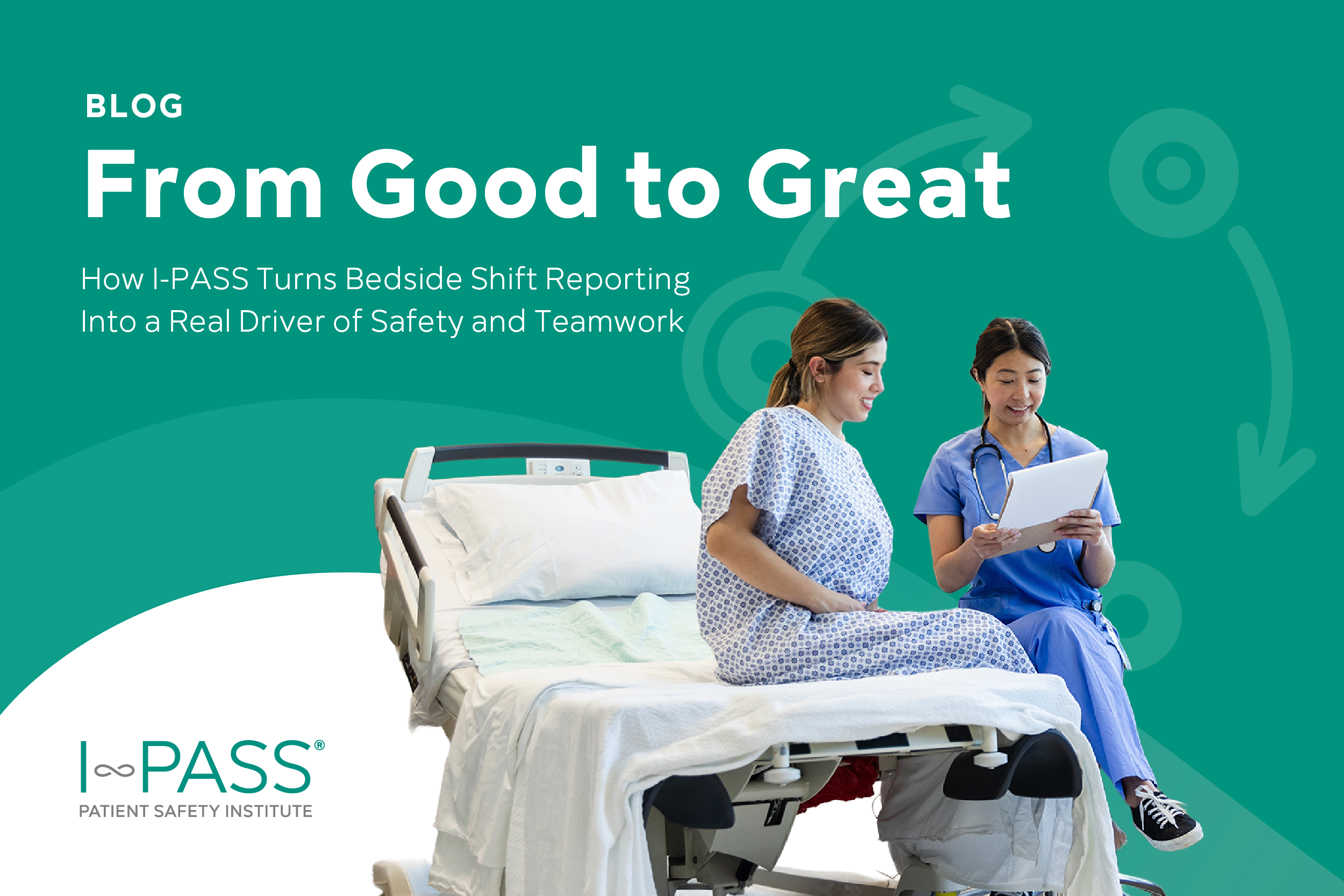
Imagine stepping onto a stage without a script, lights blinding, audience watching. Even the most experienced actor might feel a flicker of stage fright. That's what it can feel like for a nurse asked to perform a bedside shift report (BSR) without clear standards. Confidence, timing, and teamwork matter, but without structure, even skilled professionals can stumble given the complexity of the healthcare environment.
Across the healthcare industry, few practices are as widely endorsed as BSR. When done well, it deepens patient engagement, reduces preventable harm, and strengthens teamwork among nurses. But even with strong organizational commitment, the responsibility for "making BSR work" falls on professionals with limited resources and bandwidth. Between high patient volumes, time pressures, and the emotional demands of care delivery, BSR is difficult to manage consistently without programmatic support.
That's where I-PASS fills a critical need. As a structured, evidence-based communication framework, I-PASS provides hospitals with the infrastructure to achieve consistent, sustainable, and effective BSR. By equipping nurses with the clarity, support, and confidence to collaborate seamlessly, I-PASS transforms BSR from a well-intentioned ideal into a measurable driver of quality, safety, and performance.
Unlike many BSR initiatives that rely on checklists and leave implementation to already stretched staff, I-PASS embeds clinical coaches who conduct live observations, offer real-time guidance, and help teams apply the framework within their own workflows. These coaches bridge the gap between strong patient safety intentions and everyday communication challenges by connecting data to behavior change. With on-the-ground coaching and tailored implementation, I-PASS ensures the framework becomes an integral part of everyday practice, putting system-level strategies into place that "go beyond the checklist" and training clinical nurses to champion I-PASS as unit-level leaders.
How I-PASS Builds Trust Through Teamwork
At its core, BSR is about communication; this facet of care delivery drives every dimension of safety, quality, and experience, creating the foundation for effective teamwork. When handoffs happen consistently and transparently, nurses begin each shift aligned, patients feel informed and reassured, and care teams function as a cohesive unit. But clear communication in a busy clinical setting is difficult to achieve, especially at the bedside.
Before I-PASS implementation, the potential for variation of critical data elements during BSR is significant in even a single unit, let alone across like specialties within an entire health system. Leveraging the I-PASS framework to co-create shared critical data elements eliminates the ambiguity, uncertainty, and resultant anxiety that can emerge in the absence of a clear framework, reducing the cognitive load that often comes with this information exchange. From day one, nurses are engaged in the implementation process to define what information should be communicated and how. Together, we establish a shared language and sequence for every handoff, giving nurses the clarity and confidence to conduct BSR effectively, even in high-acuity, fast-paced environments.
Ultimately, I-PASS makes it easier for nurses to do the right thing, ensuring critical details are never overlooked. The framework helps every team member start their shift fully informed and aligned on the current status of the patient, so BSR becomes more reliable and inclusive of patients and families. Nurses report greater satisfaction and teamwork, patients perceive stronger coordination among caregivers, and organizations see measurable improvements in safety and engagement.
"I-PASS is adaptable across disciplines. Our teams are more engaged because they've been able to standardize communication to fit their workflows. We've even had physicians ask to be included, which speaks to how much it's improved communication and reduced the risk of missed care."
— Carol Emery, DNP, RN, CENP, NEA-BC, Chief Nursing Officer, Knox Community Hospital
Structure as the Missing Ingredient in Sustainable BSR
For BSR to be effective, hospitals must standardize not just where the report takes place, but how it happens. Structure transforms intention into habit and policy into practice. It eliminates variability, ensures accountability, and supports nurses performing complex communication under pressure, all of which support an organization's culture of safety.
By increasing compliance with BSR, structured handoff tools like I-PASS bring greater consistency and collaboration to the bedside, directly enhancing a key factor driving patients' perceptions of care quality. Hospitals implementing BSR consistently see significant improvements in both safety and patient experience, including double-digit gains in overall patient satisfaction scores linked to stronger perceptions of caregiver communication. Nurse satisfaction also increases with the use of a structured framework, as successful BSR fosters a greater sense of engagement and partnership with patients and their families.
Recent engagement survey data from an I-PASS partner hospital reflects this opportunity. While most staff report strong commitment to patient safety, far fewer feel confident in communication or collaboration across departments. This gap highlights the need for structured tools like I-PASS that turn shared safety goals into reliable daily practice.
Taken together, these outcomes are the product of visibility and trust: when patients see nurses collaborating and exchanging information in a structured way, they feel safer. And when nurses feel supported, they perform at their best.
"Implementing I-PASS has brought standardization and accountability to bedside shift reporting, turning it into a dependable driver of safety and communication. It equips our teams to deliver consistent, high-quality handoffs while actively involving patients in their care."
— Jamie Wilkerson, RN, Chief Nursing Officer, T.J. Regional Health
Empowering Stronger Outcomes Through System-Level Impact
The benefits of I-PASS extend well beyond the immediate moment of handoff. Hospitals that use I-PASS as part of their BSR process see lasting gains in both patient and workforce experience, with hospitals that score higher on team engagement surveys consistently achieving stronger patient experience results. This correlation continues to grow over time, demonstrating that workforce engagement and patient trust are two sides of the same coin.
By fostering a consistent and supportive communication environment, I-PASS helps build the foundation of a strong safety culture, one where care teams feel empowered to speak up, collaborate, and rely on each other. Research consistently shows that patients' perception of teamwork is one of the strongest predictors of whether they would recommend a hospital or clinic. When patients see nurses and physicians working together seamlessly, they equate that collaboration with safety, compassion, and quality of care. As such, hospitals that integrate structured communication into their BSR process achieve up to a 30-point increase in likelihood-to-recommend scores within a year, alongside significant improvements in perceptions of teamwork and safety.
These gains are not accidental. For CNOs and nursing leaders, I-PASS is a strategic investment in safety culture, workforce engagement, and patient experience. By supporting nurses with a structured framework to perform BSR effectively, it ensures that caregivers feel supported and positioned for success, improving their engagement, perceived teamwork, and ultimate performance.

_logo_invert.svg "IPASS(R)_logo_invert")